|
||||||||||||||||||||||||||||||||||||||||||||||||||||||||||||||||||||||||||||
|
|
||||||||||||||||||||||||||||||||||||||||||||||||||||||||||||||||||||||||||||
|
||||||||||||||||||||||||||||||||||||||||||||||||||||||||||||||||||||||||||||

More Products:
|
|
The two common sub-types of drums are the open
top and the welded top (with 2” bung holes). The
later are almost universally called 'barrels' in
preference to drums in the US. They cannot
efficaciously either dispense or be filled with
powdered goods, though they might store them
very well, so are not used for such goods, being
reserved for liquids transport and storage. Plastic
drums are manufactured using injection blow moulding
technology. Metal drums are hot rolled into long
pipe-like sections then Forged on a Stamping
Press while still red hot into drum bodies. A welded
rolled seam, is then made for the drum bottom, or
bottom and top both.
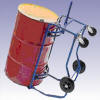
Standard drums have reinforcing rings of thickened metal or plastic at four places: Top, Bottom, and one each a third of the way from each end ring. This sufficiently strengthens them so that they can be readily be turned on their sides and rolled when filled with heavy materials, like liquids. Over short to medium distances, drums are generally tipped and rolled on the bottom rim while being held at an angle, balanced, and rotated with a two handed top grip that also supplies the torque (rotational or rolling force). The open top sub-type is sealed by a mechanical ring clamp (concave inwards) that exerts sufficient pressure to hold many non-volatile liquids and make an air tight seal against a gasket, as it exerts force inward and downward when tightened by a normal three-quarter inch wrench or rachet wrench. Tops exist with bung holes as above, and these hybrid drums cum lid can be used to ship many non-volatile liquids as well as industrial powders. Many drums are used to ship and store powdered products as well as liquids, such as plastic beads for injection moulding, extrusion, and purified industrial grade powders like cleansers (e.g., fertilizers, and powered aluminum). If used to transport dangerous goods across international boundaries, they may need to have UN certification. In general, drum usage is limited to wholesale distribution of bulk products, which are then further processed or sub-divided in a factory. Today's 55 gallon drum resulted from military shipping requirements and specifications circa World War I, the first modern war where trucks, cold rolled steel, stamp or pattern forging machinery and welding were widely available making mass produced standardized shipping containers feasible. The 55 gallon drum will fit handily four to a fork truck standard wooden shipping pallet and so greatly ease material handling and rapid shipping. The drums size, shape, and weight distribution lends itself readily to being moved about readily on the loading dock or factory floor with a two wheeled Hand Truck. The now ubiquitous welded top steel drums played a vital strategic role in the first United States strategic offensive in the South Pacific Theater during World War II, in particular, though a huge part of the allied effort on all fronts. This happened because neither side could maintain Control of the Seas (or SLOC - Sea Line of Communications) during the Battle of Guadalcanal (7 August 1942 - 9 February 1943); The Japanese Navy was held to night operations because the Marine Aviators on the island could bomb by day keeping the stronger Japanese fleet at arms length, but only because of the lowly fuel drum. The much needed aviation fuel was off-loaded from ships (frequently as deck cargo on fast ships like destroyers) in the daylight using the technique of off loading the barrels by simply shoving them over the sides (or time permitting, lowering them in cargo nets), where they were corralled and pulled to shore by navy Seabees in a variety of small craft. Aviation fuel is significantly lighter than seawater so the drums floated allowing this expedience. Normal freight handling would have taken too long to sustain the aircraft on Guadalcanal, dubbed by the colorful moniker, The Cactus Airforce. This freed up precious time and resources, for the most part, to offload and land less compliant goods lower priority goods and materials like food, weapons, medicines, et al. For months while new construction gradually augmented the allied naval strength, the allied ships would pull out again as night fell - when the Tokyo Express ran in reinforcements for the Japanese under strong naval escort. 44 gallon drum
The drums are typically made of steel with a ribbed outer to improve rigidity and durability. They are often moved by tilting, then rolling along the base, which is designed especially for that purpose. The drums are commonly used for transporting oils and fuels, but can be used for storing various chemicals as well. Closed-head steel barrels and drums used for shipment of chemicals and petroleum products have a standardised bunghole arrangement, with one 2 inch NPT and one 3/4 inch NPT threaded bunghole on opposite sides of the top head. This arrangement is echoed in many plastic drums in the same size. These drums are also available in open head forms, with a clamp ring or flanges that hold a loose lid (often with a gasket) down on the top. In the past, hazardous waste was often placed in drums of this size and stored in open fields or buried. Over time, some drums would corrode and leak. As a result these drums have become iconic of pollution problems, even though they have numerous legitimate uses and are ubiquitous in commerce. Although oil is sometimes shipped in 44 Imperial-gallon drums, the measurement of oil in barrels is based on 42 US-gallon wooden barrels of the 1870s. The steel drums used in calypso music are made from these drums. Plastic drums Uses include the storage of dry goods, or they can be used as rain barrels.
|