|
|||||||||||||||||||||||||||||||||||||||||||||||||||||||||||||||||||||||||||||||||||||
|
|
|||||||||||||||||||||||||||||||||||||||||||||||||||||||||||||||||||||||||||||||||||||
|
|||||||||||||||||||||||||||||||||||||||||||||||||||||||||||||||||||||||||||||||||||||
More Products:
|
|
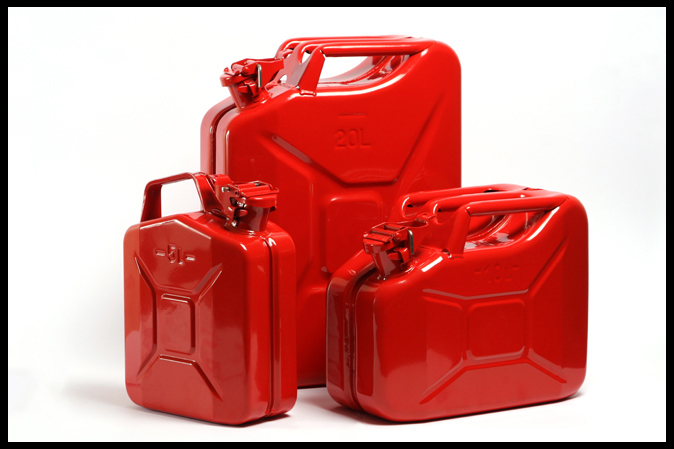
A jerry
can is a robust fuel container made from pressed steel. It was
originally designed in Germany in the 1930s for military use and
holds 20 litres In
1939, an American engineer named Paul Pleiss had built a vehicle to
journey to India with his German colleague. After building the car,
they realized they didn't have any Pleiss
told American military officials about the jerry cans, but they
ignored him. Without a sample, he realized he couldn't get anywhere.
He eventually got the car shipped to New York by a roundabout
method, and sent a jerry can to Washington. The War Department
decided instead to use the WWI ten-gallon jerry can with two screw
closures, which required both a wrench and funnel for pouring.
At the beginning of the Second World War, the British Army were equipped with simple rectangular fuel containers: a 2 gallon (9 litres) container made of pressed steel and a 4 gallon (18 litres) container made from tin plate. While the 9 litre - 2 gallon containers were relatively strong, they were expensive to produce. The 18 litre - 4 gallon containers, which were mainly manufactured in the third world, were cheap and plentiful but they were not very robust. Consequently they were colloquially known as flimsies. While
adequate for transportation by road in Europe, the flimsies proved
to be extremely unsatisfactory during the Northof the fuel being
lost as the containers were easily punctured. The resultant leakages
also made the transportation vehicles liable to fuel fires. The sides of the jerry can were marked with cross-like indentations that strengthened the jerry can while allowing the contents to expand, as did an air pocket under the handles when the jerry can was filled correctly. Rather than a screw cap, the containers used a cam lever release mechanism with a short spout secured with a snap closure and an air-pipe to the air pocket which enabled smooth pouring (which was omitted in some copies). The interior of the jerry can was also lined with an impervious plastic, first developed for steel beer barrels that would allow the cans to be used for either water or gasoline. The jerry can was welded, and had a gasket for a leak-proof mouth. The British used cans captured from the "Jerries" (Germans) — hence "jerry cans" — in preference to their own containers as much as possible. Later in 1940 Pleiss was in London, and British officers asked him about the design and manufacture of the jerry can. Pleiss ordered the second of his three jerry cans flown to London.
|
Visit:
www.4x4-web.com
www.4x4online.biz
www.gas-can.biz
www.jerrycans.org
www.limes-germany.de
www.limes-globaltrading.de
www.limes-saifzone.de
www.limes-sharjah.de
www.petrolcans.com
www.logo-animator.net
www.myflat.org
www.limes-jobs.com
www.elarabi.biz
www.elarabi.de
www.elarabi.eu
www.elarabi.org
www.hasarabi.de
More Products:
20l ecco plastic kerosene cans
military metal fuel jerry cans spouts
fuel jerry cans and military metal fuel jerry cans carrier
plastic water cans and military plastic water cans holders
military jerrycans and jerrycans holders
water jerrycan, and jerrycans holders
collapsible water cans and metal water jerry cans
collapsible water cans and military metal water jerry cans
plastic diesel fuel jerry cans
plastic diesel fuel jerry cans
military plastic petrol jerry cans holders
plastic diesel fuel jerry cans
military plastic diesel fuel jerry cans holders
20l stainless steel jerry cans spouts
stainless steel and non-explosion military jerrycans
military metal fuel jerry cans
20l military metal fuel jerry cans holders
10l metal fuel jerry cans and military metal fuel jerry cans nozzle
non-explosion military jerry cans holders
non-explosion military jerrycans spouts
military plastic gasoline fuel jerry cans
plastic gasoline fuel jerry cans
20l military plastic gasoline fuel jerry cans
military plastic gasoline fuel jerry cans carriers
20l military plastic gasoline fuel jerry cans holders
plastic gasoline fuel jerry cans
20l metal fuel and water jerry can
10l metal fuel jerry cans and military metal fuel jerry cans holders
20l military metal fuel jerry cans carrier
water jerry cans and military plastic water jerry cans
military plastic water cans spouts
petrol military metal jerry cans
military metal petrol jerry cans
explosion-safe fuel jerricans holders
metal petrol jerry cans accessories
water jerrycans and military water jerrycans
plastic fuel jerry cans accessories
fuel jerry cans and military plastic fuel jerry cans
water cans and military metal water jerry cans
military metal water jerry cans holders
metal water jerry cans nozzles
military metal fuel jerry cans carriers
Fuel storage Tanks and Containers
fuel and water storage containers
non-explosion military jerry cans
20l nato metal fuel jerry cans
20l nato military plastic water cans
plastic petrol jerrycans spouts
military plastic petrol jerrycans
petrol jerrycans and military jerrycans holders
Fuel storage Tanks and Containers
plastic water jerricans spouts
Fuel storage Tanks and Containers
military metal fuel jerry cans accessories
non-explosion military jerrycans
20l military metal fuel jerry cans accessories
Stainless steel fuel can accessories
Ausguss-Stutzen für Edelstahl-Kanister
Can accessories, gas can carrier
military metal fuel jerry cans accessories
military jerrycans accessories
20L, 10L Stainless Steel jerry cans
20L, 10L Stainless Steel jerry cans
metal fuel storage cans accessories
military fuel storage cans accessories
Genuine SUV 4x4 Parts & Accessorie
Fuel storage Tanks and Containers